
Closed-cell foam insulation in Victoria TX - a tight seal against air and moisture
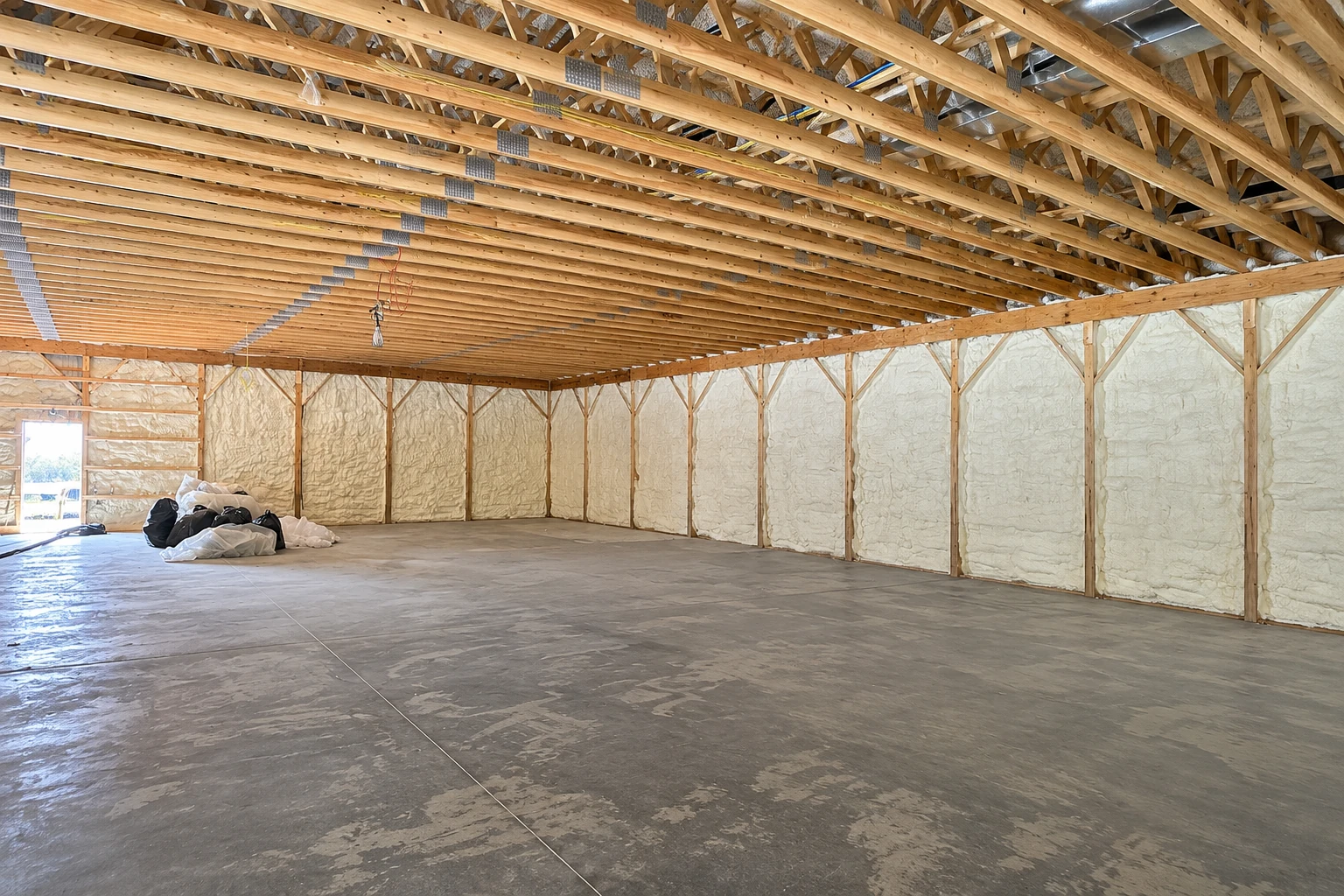
Hot upstairs, ductwork baking in the attic, or a spot that might get wet? Dense foam seals and insulates in one layer.
- Fully licensed and insured.
- Free in-person estimates.
- We reply within 1 business day.
Is closed-cell foam worth the extra cost on your house?
Closed-cell foam insulation is a dense spray foam that sets hard and seals out air and moisture while it insulates. In Victoria, TX, I'd recommend it where that extra protection is worth its higher price, like under the roof, along the floor framing and in spots that might see water.
Most folks who call about it have a hot room upstairs, a room over the garage that never cools, or ductwork running through a hot attic. The price mostly depends on how much area we cover, how thick the foam goes, how hard the space is to reach, and whether old insulation has to come out first through insulation removal. The schedule depends on that same cleanup, on the roof wood being dry, on the permit check and on when your family can be out of the house, and your own figure comes from the estimate once I've seen the space.
How we install closed-cell foam insulation
I look the whole house over before we quote, because closed-cell costs more and should only go where it earns its price. If old insulation got soaked or is full of droppings, it comes out first, or the problem just stays under the new foam. Before we spray the underside of a roof, we check that the roof wood is dry, since wet wood under foam has a hard time drying out. Then our crew covers anything that shouldn't get foam and sprays in passes up to the planned thickness. We work the edges and corners as carefully as the middle, because thin edges are where heat gets in. We clean up, and I check every corner before we call the job done.
Closed-cell isn't the only foam we spray. Where moisture isn't a worry and there's room for a thicker layer, open-cell foam insulation is often the better fit, and for shops and metal buildings we also handle commercial insulation.
Closed-cell at the roofline or in tight, damp spots
This suits houses where the ductwork lives in the attic, where rafters leave little room, or where a spot might see water. In those places a thin, dense layer that seals as it insulates is worth paying more for.
Sealing gaps and topping up instead
If the attic is open, the ducts aren't up there and there's room to work, I'd usually recommend air sealing first, which means closing the gaps around lights, pipes and the hatch, and then adding blown-in insulation, loose fill blown through a hose. It costs less than foam, and if that's the better plan for your house, I'll tell you so.
If you see a leak or wet roof wood, please call before you plan any foam, because the leak has to be fixed and the wood has to dry first.
What happens after you call about closed-cell foam?
I'd like you to know what we're doing and why before you agree to anything. Here's how a closed-cell job usually goes, from your first call to the walk-through at the end.
Call or send a request
Call (361) 363-1202 or use the form, and we'll get back to you by phone or message to set a time. Let us know which areas you're thinking about, so I can bring what I need to check them.
I look the house over
I come out myself and look over the attic, walls or crawl space, including the roof wood and any old insulation. Then I write down what I found, what I'd do first and why, so you know what you're paying for and can compare it fairly with other quotes.
Crew sprays, I check it
Once any permit question is settled and you've made plans to be away, our crew does the work. We're fully licensed and insured, and I walk the finished work with you before we leave. Your satisfaction, guaranteed.
Get a written plan for closed-cell foam on your house
Send the form and we'll reply within one business day, by phone or message, to set up a visit. I come out myself for the free in-person estimate, and there's no pressure to book.
(361) 363-1202Closed-cell foam insulation permits in Victoria
The City of Victoria says most construction inside the city limits needs a building permit, and its Development Center is the office that issues them. The city also says it issues permits only to licensed general contractors, and the Development Center answers licensing questions at 361-485-3320. The city works from the residential building code with its own local changes, so I'd rather ask than guess whether a foam job on your house needs a permit. Before we start, I check with the permit office and tell you what they said. If a permit is needed, we work out with you who applies, and we don't begin until it's in place.
Around here we mostly see houses with ductwork in a hot attic, rooms over garages that never cool, and metal buildings that sweat on the inside. We're based in Victoria and see the same kinds of houses on jobs in Port Lavaca and Edna, as well as Cuero and other cities around them. If you're not sure we come out your way, just call and ask.
Closed-cell foam questions from Victoria homeowners
Why does closed-cell spray foam cost more than open-cell?
Closed-cell costs more to install mainly because it takes more material to fill the same space. For that you get a dense foam that sets hard, usually insulates at about R-6 per inch, R-value being how well insulation slows heat, and at its usual thickness also slows moisture coming through. If you choose it, plan on paying for that extra material, and I'll show you where it's worth the cost on your house and where it isn't.
How long does it take before we can go back in the house after spray foam?
Federal safety guidance says to stay out of the home during the install and for at least 24 hours after it. That guidance also says to talk through safety steps with your contractor, so we go over the re-entry time, meaning when you can come back, before the spray day. I'd recommend booking a place for your family and pets to stay before the crew arrives.
Can closed-cell foam be sprayed under my roof deck in Victoria?
Yes, closed-cell foam can be sprayed under the roof to make an unvented attic, one with no vents to the outside, or to insulate a cathedral ceiling. Because it insulates so much per inch, it can reach the required level even where the rafters leave little room. Federal guidance says the roof wood should measure below 19% moisture, or the foam maker's level, before spraying, which is the dry-wood check I described above.
What is the best way to insulate rim joists with closed-cell foam?
Spraying foam on the rim joists, the boards that ring the edge of the floor framing, seals air and insulates in one step. To count as an air barrier, closed-cell foam has to finish at least 1.5 inches thick, so that's a good number to ask any installer about.
Does spray foam insulation need to be covered with drywall?
Some spray foams need a fire-rated cover, such as a special coating or drywall, and some don't, depending on the foam and the code. I check what the foam we'd use and the code call for in your space, and I put any cover it needs in writing with the rest of the plan.
Should I add a vapor barrier over closed-cell foam in my walls?
A federal foam guide says no for hot, humid climates, where walls with closed-cell foam should not get an inside vapor barrier. Two moisture barriers in one wall could trap water in the space between them. The same guide says closed-cell in those climates handles air sealing and moisture control at the outer side of the wall.
Other insulation work that pairs with closed-cell
If your attic has room for a thicker layer and no spots likely to get wet, open-cell is a lighter foam worth comparing against closed-cell.
If you own a shop, rental space or metal building, our commercial work covers larger spaces where foam has to deal with heat and sweating metal panels.
Plan your closed-cell foam estimate
Jot down where you'd like foam, such as the attic, walls or rim joists, and which days you could be away from home, then call (361) 363-1202 or send the form so I can plan the visit around it.