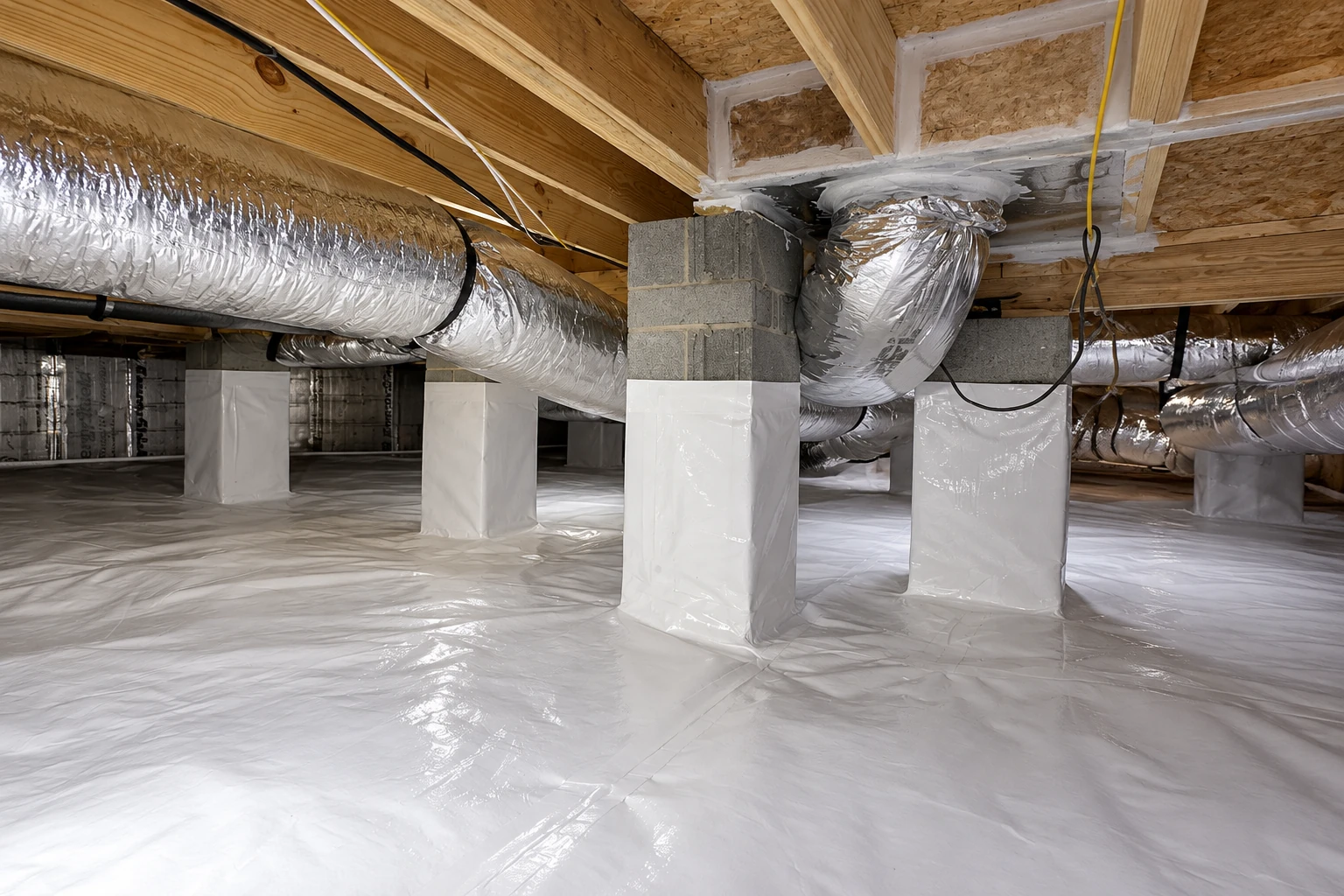
Vapor barrier installation in Victoria TX - a crawl space covered wall to wall
Bare dirt, torn plastic or a musty smell under the floor? We lay a ground cover that reaches every wall and pier.
- Fully licensed and insured.
- Free in-person estimates.
- We reply within 1 business day.
Do I need a vapor barrier in my crawl space?
Vapor barrier installation in Victoria, TX means laying a plastic ground cover over the soil in your crawl space, so moisture from the ground stays down and away from the wood under your floors.
Most folks call after they notice a musty smell or cold floors, or they look through the crawl space hatch and see bare dirt or old plastic that's torn and bunched up. The price moves with the size of the crawl space, the thickness of the sheeting, how many piers and how much wall the cover has to wrap, and whether you'd like the space sealed and insulated too, while the schedule turns mostly on how tight the access is and how much has to be cleared out first. We're fully licensed and insured, and my estimate writes down what I found, what I'd do first and why, so you have your own figure in hand. If the floors still feel cold once the cover is down, crawl space insulation is usually the next thing I'd look at.
How we handle vapor barrier installation under your house
First we bring out stored items and debris, because the cover has to reach every part of the ground to do its job. Then we lay the sheeting across the whole floor, run it up the walls and around the piers, and overlap every seam, which is how federal weatherization guidance says the job should be done. We take care not to block the way water already drains under the house, because a cover that dams up that path only moves the problem somewhere else.
A crawl space cover handles the ground, but it isn't the whole house. If upstairs runs hot or the power bill climbs every summer, attic air sealing, which closes the gaps around lights, pipes and the hatch, usually comes before any new insulation goes up there. In an older home where the walls and attic are thin, retrofit insulation adds to what's already there, and I'll say on the estimate which job I'd do first.
Ground cover in a vented crawl space
This suits most houses that keep their vents open, because the cover does its work without changing how the crawl space breathes. If your house sits in a flood-prone area, this is the route I'd recommend, for the reasons in the flood question below.
Ground cover with a sealed, insulated crawl space
Building scientists recommend insulated, unvented crawl spaces for humid climates, so this suits a house outside a flood-prone area where you'd like the space closed up. In that setup we also seal the seams and the spots where pipes or posts come through, using a durable sealant that suits the plastic.
Replacing an old or partial cover
This suits a house that already has plastic down, but it's torn, bunched or stops short of the walls. We take out what can't be saved and lay new sheeting that reaches the walls and piers like a new job.
If the plastic under your house is torn, missing in spots or sitting in water, I'd call rather than wait, and we'll get back to you by phone or message.
What happens when you call us about a crawl space vapor barrier?
Here's how a vapor barrier job runs with us, from your first call to the last check. I'll explain each step before I ask you to agree to anything.
Call or send a request
Call (361) 363-1202 or use the form, and we'll get back to you by phone or message to set up a visit. It helps to tell us whether your crawl space has vents.
I look under your house
I come out myself and look at the ground, the walls, the piers and how water moves under the house. Then I write down what I found, what I'd do first and why, so you can compare it fairly with other quotes.
Our crew lays the cover
If you'd like us to go ahead, our crew does the work the way I laid out above. You don't need to be under the house with us, but we'll keep you posted as we go.
We walk the finished job
Before we call it finished, I check the cover at every wall and pier and walk the work with you. Your satisfaction, guaranteed.
Get a written plan for your crawl space cover
We reply within one business day to set up a visit. I come out myself for the free in-person estimate and write down what I'd do first and why, with no pressure to book.
(361) 363-1202Vapor barrier installation in Victoria and what the city asks
Inside city limits, the City of Victoria Development Center issues building permits, and most construction there needs one. Its list names electrical, mechanical, plumbing and new home or remodel work but doesn't mention vapor barriers, so the list alone doesn't settle whether this job needs a permit. The city builds to the International Residential Code, the standard code for homes, with its own changes. Before we start, I check with the Development Center, or the local permit office if you're outside the city, and tell you what they said. If a permit is needed, we sort out with you who applies, and we don't begin until it's in place.
A lot of the crawl spaces we see around Victoria have bare dirt, a scrap of old plastic or a cover that stops short of the walls, and we see the same on jobs in Port Lavaca and Edna. We're based in Victoria and also work in Cuero and other cities around them, so if you're not sure we come out your way, just call and ask.
Crawl space vapor barrier questions from Victoria homeowners
Does my crawl space need a vapor barrier if it has vents?
Yes, a ground cover belongs in a vented crawl space just as much as a sealed one. Vents move air, but they don't stop what comes up from the soil, and the plastic also helps keep soil gases from getting into the house.
How thick should a crawl space vapor barrier be?
Federal weatherization guidance sets 6 mil, or six thousandths of an inch, as the minimum. One cost-guide publisher calls 20-mil sheeting far tougher and nearly impossible to tear in normal use, and finds the upgrade worth it for rough ground, exposed gravel or a crawl space that gets frequent visits for heating, cooling or plumbing work. I'd recommend we choose after I've seen your ground and how often someone goes under.
Should I seal my crawl space if my house is in a flood area in Victoria?
No, federal building guidance says a sealed, conditioned crawl space shouldn't be used in a flood-prone area. A vented crawl space can be built or retrofitted to resist flood damage instead. The City of Victoria points to FEMA's revised flood maps for Victoria County, so I'd recommend we check where your house sits before anyone talks about closing the vents.
How much does vapor barrier installation cost in Victoria, TX?
I can't give you a fair number until I've been under your house, because the price comes down to the things I listed up top, mainly size, thickness and how much wall and pier there is to wrap. My estimate spells out what I found and what I'd do first, so you can see what each part covers.
What causes moisture in a crawl space under my house?
In a vented crawl space, most of the water usually gets in from outside, through poor grading, missing drainage around the house or sprinklers set the wrong way. In a humid climate, warm outdoor air coming through the vents can also condense on the cooler framing. It's worth asking any crew whether the yard is sending water under the house, because a cover alone won't fix that.
How do I keep a crawl space vapor barrier from tearing?
Lay a vinyl runner or an extra layer of plastic over the paths that get walked, such as the way to the furnace, so the main cover takes less wear. Heavier sheeting helps too, as I mentioned in the thickness answer.
Insulation work that pairs with a crawl space cover
A dry crawl space won't help much if air pours through gaps around the attic hatch, pipes and lights, leaving the upstairs rooms hot all summer.
Older houses often hold far less insulation in the walls and attic than newer ones, and we can add more without tearing out finished rooms.
Get your crawl space covered the right way
Call (361) 363-1202 or send a request with your address, so I can look at the flood map for your house before I come out.