Crawl space vapor barrier in Victoria, TX - a sealed ground cover under your house
Musty smell, damp floor joists or torn plastic under the house? We sort out the water first, then patch or replace the ground cover.
- Fully licensed and insured.
- Free in-person estimates.
- We reply within 1 business day.
What does a crawl space vapor barrier actually do?
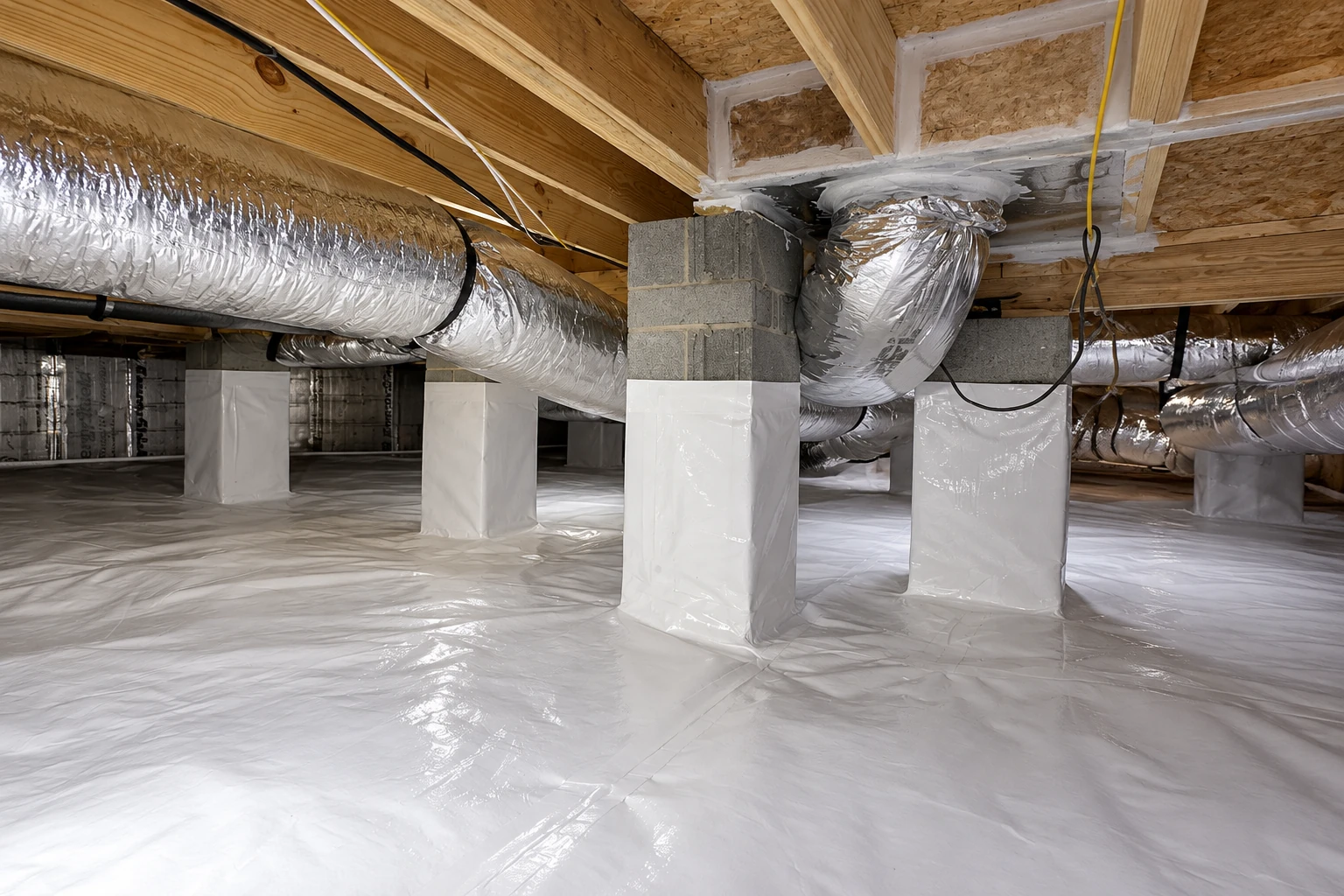
A crawl space vapor barrier is a sheet of plastic laid over the bare soil under your house, and on homes in Victoria, TX it keeps ground moisture and soil gases from working their way up into the crawl space and the rooms above it.
Most folks call us at Superior Victoria Spray Foam Insulation because the plastic under the house is torn or missing, the floors feel damp, or a plumber came out and said the crawl space looked wet, and we hear the same from homeowners in Victoria and the cities around it. The price and the schedule usually turn on a few things: how big the crawl space is, how much has to be cleared out, whether water or mold has to be handled first and whether your old plastic is worth saving. If your floors are cold as well, plastic alone won't fix that, and crawl space insulation may be the other half of the job. When I come out, I write down what I found, what I'd do first and why, so you know what you'd be paying for before you decide anything.
How we put in a crawl space vapor barrier
We start by clearing out the debris and anything else in the way, so the plastic can cover the whole floor. Then we deal with any standing water or mold before a single sheet goes down, because plastic laid over a wet, moldy floor just hides the problem. If I find rotten wood or anything hazardous under there, I'll show you, and we'll plan it as the first step so it's part of your budget from the start. Once the floor is ready, we either repair your old cover or lay a new one, and I'll tell you honestly which one I'd recommend for your house.
Plastic on the ground handles moisture coming up from the soil, but it's only one part of keeping a house dry and comfortable. If you'd like moisture kept out of other parts of the house too, our vapor barrier installation work goes in walls and ceilings, and if the rooms upstairs run hot or drafty, attic air sealing closes the gaps the air slips through at the top of the house.
Patching the old plastic
This suits a cover that's mostly whole but has open seams, small tears or edges that have pulled loose. We tape the tears and seams and run the edges back up the walls, which costs less but won't hold up as long as a new layer.
A new sealed layer
This suits plastic that's torn in many places, brittle or mostly gone. The new sheet goes over the old one, sealed at every seam and fastened to the walls and piers, and it's the one I'd usually recommend because it lasts longer.
Reinforced plastic for equipment
One older guide says thicker, reinforced plastic holds up better, and that plain sheeting needs protecting wherever someone crawls in to service equipment. If your heating and cooling unit or ductwork sits under the house, I'd recommend the reinforced grade.
If you've seen standing water, mold or soft wood under the house, I'd recommend calling (361) 363-1202 rather than waiting, because those problems tend to get worse while they sit.
What happens when you call us about a crawl space vapor barrier?
Here's how a vapor barrier job runs with us, from your first call to the walk-through at the end, so you know who you'll talk to and what you'll get at each step.
Call or send a request
You call (361) 363-1202 or use the form, and we get back to you to set a time for me to come out. It helps to have your address ready, whether the crawl space has vents and any standing water or mold you've noticed.
I look under your house
I come out myself, go into the crawl space and write down what I found, what I'd do first and why. That way you can see where the money would go, including any water or mold work, and compare it fairly with other quotes.
Our crew does the work
If you'd like us to go ahead, our crew clears the space, takes care of any water or mold, and then patches the old cover or lays the new one. You can usually stay in the house the whole time, because nothing gets sprayed for this job.
We walk the job together
I check the finished crawl space and walk it with you before we leave, so you can see the cover and ask about anything you're unsure of. Your satisfaction, guaranteed.
Get a written plan for your crawl space
We reply within one business day, by phone or by return message, to set up a visit. I come out for a free in-person estimate and write down what I'd do first and why, with no pressure to book.
(361) 363-1202Crawl space vapor barrier work in Victoria
Most construction inside Victoria city limits needs a building permit from the city's Development Center. Its list names electrical, mechanical and remodel work but doesn't mention vapor barriers, so I can't tell you ahead of time whether your job needs one. Before we start, I check with the permit office about your job and tell you what they said. If a permit is needed, we work out with you who applies, and we don't begin until it's in place. If you'd like to ask about your own project, Victoria Development Services takes building permit questions at 361-485-3320. We're fully licensed and insured.
A lot of the houses we crawl under are older homes on piers, where the plastic has to fit around many supports and the old cover has often been torn up by years of repair visits. We see the same kind of crawl spaces on jobs in Port Lavaca and Cuero. If water tends to sit around your house after a hard rain, you can check where your home sits on the flood maps on the city's floodplain page before I come out.
Crawl space vapor barrier questions from Victoria homeowners
Do I need a vapor barrier if my crawl space has vents?
Yes, a plastic ground cover should go down whether your crawl space has open vents or is closed up. Vents let air move, but they don't stop moisture and soil gases coming up from the dirt, so a vented crawl space is still a good fit for a full cover.
What causes water to get into a crawl space?
In a vented crawl space, most of the water runs in from outside, through yard grading that slopes toward the house, missing drainage around the foundation or watering that soaks the beds next to it. Plastic won't stop that, so if I see signs of water coming in, I'll show you where it's coming from so you can decide how to deal with it.
How much does a crawl space vapor barrier cost in Victoria, TX?
There isn't one price, because it depends mostly on the size of your crawl space and what has to happen before the plastic goes down. Clearing out a lot of debris, handling standing water or mold and choosing a new reinforced layer all raise it, while a dry, open crawl space with old plastic worth patching keeps it lower. I'll write down what I found and what I'd do first, so you can see where the money goes.
Should I close off my crawl space instead of just covering the dirt?
It can make sense, but it's a bigger job than a ground cover. One older guide says a closed crawl space needs a fully sealed vapor barrier on the floor and walls, plus a way to dry the air, such as conditioned air or a dehumidifier. Building scientists recommend insulated, unvented crawl spaces in humid climates, because warm outside air coming through the vents can leave moisture on cooler framing, and I'd recommend we talk it through once I've seen yours.
How do I get my crawl space ready for a vapor barrier?
Move anything you store under the house before the crew arrives, because the plastic needs to cover the whole floor. If something is too heavy or awkward to move, just tell me during the visit and we'll plan around it.
What thickness of plastic should a crawl space vapor barrier be?
A Department of Energy guide sets a minimum thickness for a crawl space ground cover and a limit on how much moisture can pass through it. You're welcome to ask whether the liner in any quote, ours included, meets that guide, and I'll tell you which plastic I'd use and why.
Related services for your crawl space and attic
If damp air is a worry beyond the crawl space, a vapor barrier in the walls or ceiling can help keep moisture out of the insulation.
When the upstairs stays hot or drafty, sealing the gaps around can lights, pipes and the attic hatch keeps cooled air from leaking out through the attic.
Have your crawl space looked at first
Call (361) 363-1202 or use the form, because the sooner I see what's under your floor, the sooner you'll know whether it needs a patch, a new cover or a water problem fixed first.